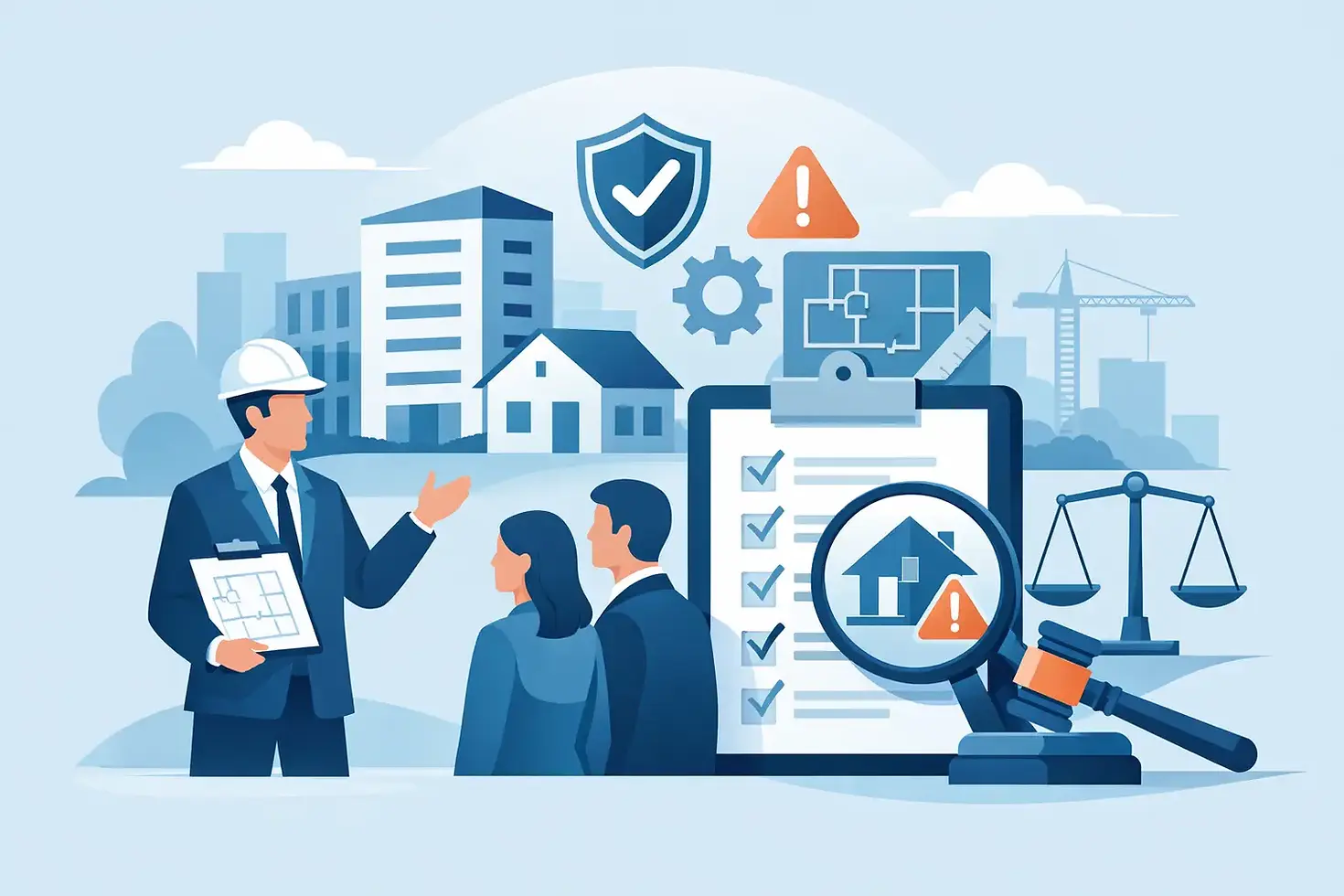
Why Building Code Compliance Consulting Matters

A project can look right on paper and still hit a wall once permits, plan review comments, or field inspections begin. That is usually where building code compliance consulting proves its value. It brings code requirements into the project early, so owners, developers, and design teams can make informed decisions before time and money are tied up in revisions, delays, or avoidable construction changes.
For property owners and project teams in New York, code compliance is rarely a simple checklist. The challenge is not just knowing that rules exist. The challenge is understanding how those rules affect layout, occupancy, fire protection, accessibility, structural scope, mechanical systems, and the sequence of approvals that keep a project moving.
What building code compliance consulting actually does
At its core, building code compliance consulting helps a project align with applicable regulations from concept through construction. That may include reviewing proposed use and occupancy, checking egress and life safety requirements, evaluating accessibility obligations, confirming construction type limitations, and identifying where design intent may conflict with code.
The practical benefit is clarity. Instead of discovering problems during plan examination or after work has started, teams can identify code-related issues while options are still open. That tends to reduce redesign costs and improve coordination between architecture, engineering, ownership, and construction stakeholders.
This work is especially valuable on projects where the scope seems straightforward but the code path is not. A small commercial interior renovation, mixed-use alteration, building expansion, or residential conversion can trigger requirements that are easy to underestimate. In those cases, early compliance guidance is less about formality and more about protecting the project schedule.
Why code issues become expensive
Most project delays tied to code are not caused by a total lack of planning. They usually come from assumptions. A team assumes an existing condition can remain as is. An owner assumes a change of use is minor. A contractor assumes an installation detail will be accepted in the field. Then review comments arrive, or an inspector raises a concern, and the project has to react under pressure.
That reaction often costs more than proactive review would have. Redesign fees increase. Permit timelines stretch. Material orders may need to change. In occupied buildings, delays can affect tenants, operations, or planned openings. For commercial clients, that can quickly become a revenue issue, not just a construction issue.
There is also a risk management side to this. Code compliance supports life safety, accessibility, and long-term building performance. If a project moves forward with unresolved code issues, the problem may not end at permit approval. It can reappear during inspection, certificate sign-off, refinancing, leasing, or future alterations.
Building code compliance consulting during design
The strongest time to address code is during planning and design, before the project has hardened around assumptions. During this phase, consulting can help define realistic parameters for what the project can do within the building’s existing conditions, zoning context, and intended use.
For example, code review may affect how much occupant load a space can support, whether a second means of egress is required, how accessible routes are provided, or whether fire-rated separations need to be added. These are not minor technical details. They can directly influence floor plan efficiency, construction cost, and the overall business case for a project.
This is where a coordinated architecture and engineering approach has a clear advantage. Code questions rarely stay in one discipline. A life safety decision may affect structural openings, MEP routing, ceiling assemblies, and finish selections. When design and technical review are aligned, compliance is easier to build into the project rather than layered on after the fact.
Where owners and developers benefit most
Not every project needs the same level of code consulting. A limited interior refresh may require far less analysis than a change of occupancy, vertical enlargement, or major rehabilitation. The value depends on project type, building condition, jurisdictional requirements, and how much risk the owner can tolerate.
Still, there are a few situations where building code compliance consulting tends to pay off quickly. One is adaptive reuse, where older buildings are being repositioned for new purposes. Another is phased renovation in occupied properties, where maintaining operations adds complexity. A third is residential and mixed-use work where multiple codes, approval tracks, and inspection requirements intersect.
For homeowners, the concerns are often more practical than technical. They want to know whether an addition, basement improvement, or layout change will create approval issues later. For commercial owners and developers, the concern is usually broader: whether the project can move from concept to completion without costly surprises.
The New York factor
In New York, code compliance has local realities that make early guidance even more important. Dense urban conditions, older building stock, layered agency requirements, and high expectations around safety and accessibility all increase the need for disciplined review.
Projects in Queens, Brooklyn, the Bronx, Staten Island, Nassau County, and nearby Long Island communities can vary widely in terms of building type, lot conditions, and approval complexity. A solution that works in one property may not transfer neatly to another. Existing conditions, prior alterations, and documentation quality can all shape the compliance strategy.
That is why local experience matters. Building teams need more than a theoretical reading of code. They need practical judgment about how requirements will affect design, permitting, and construction in the real conditions of the project.
Common areas where compliance consulting adds value
Some code issues are predictable, even if their impact is not. Egress is one of the most common. Travel distance, door swing, exit access, and stair requirements can alter layouts more than owners expect. Accessibility is another area where early review matters, especially in renovations where teams may assume existing constraints automatically excuse upgrades. Often, they do not.
Fire protection requirements also deserve close attention. Depending on the scope, occupancy, and building configuration, a project may need rated assemblies, fire stopping, sprinkler modifications, alarms, or other life safety measures that affect both design and cost. Mechanical and plumbing changes can trigger related code considerations as well, particularly in tenant improvements and building upgrades.
Then there is the issue of existing conditions. Older properties often contain undocumented work, legacy systems, or conditions that do not cleanly match current records. Compliance consulting helps teams identify what can remain, what must be corrected, and where additional investigation is worth doing before final design moves ahead.
Choosing the right consulting approach
Good code consulting is not about making a project more complicated than it needs to be. It is about giving decision-makers a clear path. That means translating code into design and construction choices, not just citing sections.
The right approach usually starts with the project’s actual goals. Is the owner trying to secure permits efficiently, control construction cost, support a change in use, or reduce risk on an existing building improvement? The scope of consulting should match those goals. Some projects need an early feasibility review. Others need ongoing coordination through design, filing, and construction administration.
It also helps to work with a team that understands how compliance fits into the larger delivery process. Code is one part of project success, but it touches everything else. When consultants can connect compliance with architecture, engineering, scheduling, and field execution, the guidance becomes more useful and more actionable.
For clients looking for that coordinated support, firms such as Innation Engineering & Architecture bring architecture and engineering together in a way that helps reduce handoff issues and maintain alignment from planning through construction.
Building code compliance consulting as a project advantage
There is a tendency to view code only as a constraint. In practice, it can also be a planning tool. When project teams understand the rules early, they can compare options more realistically, protect the schedule, and avoid spending money on concepts that will not survive review.
That does not mean every compliance question has a perfect answer. Some projects involve real trade-offs between design goals, construction cost, existing conditions, and approval timelines. A strong consultant helps clients see those trade-offs clearly and choose the path that best supports the project.
For owners, developers, and residential clients, that kind of guidance is often the difference between a project that keeps moving and one that keeps getting corrected. The earlier compliance is addressed, the more control the team usually has over cost, timing, and outcome.
The best time to think about code is before it becomes a problem, when there is still room to make smart decisions with confidence.


Comments