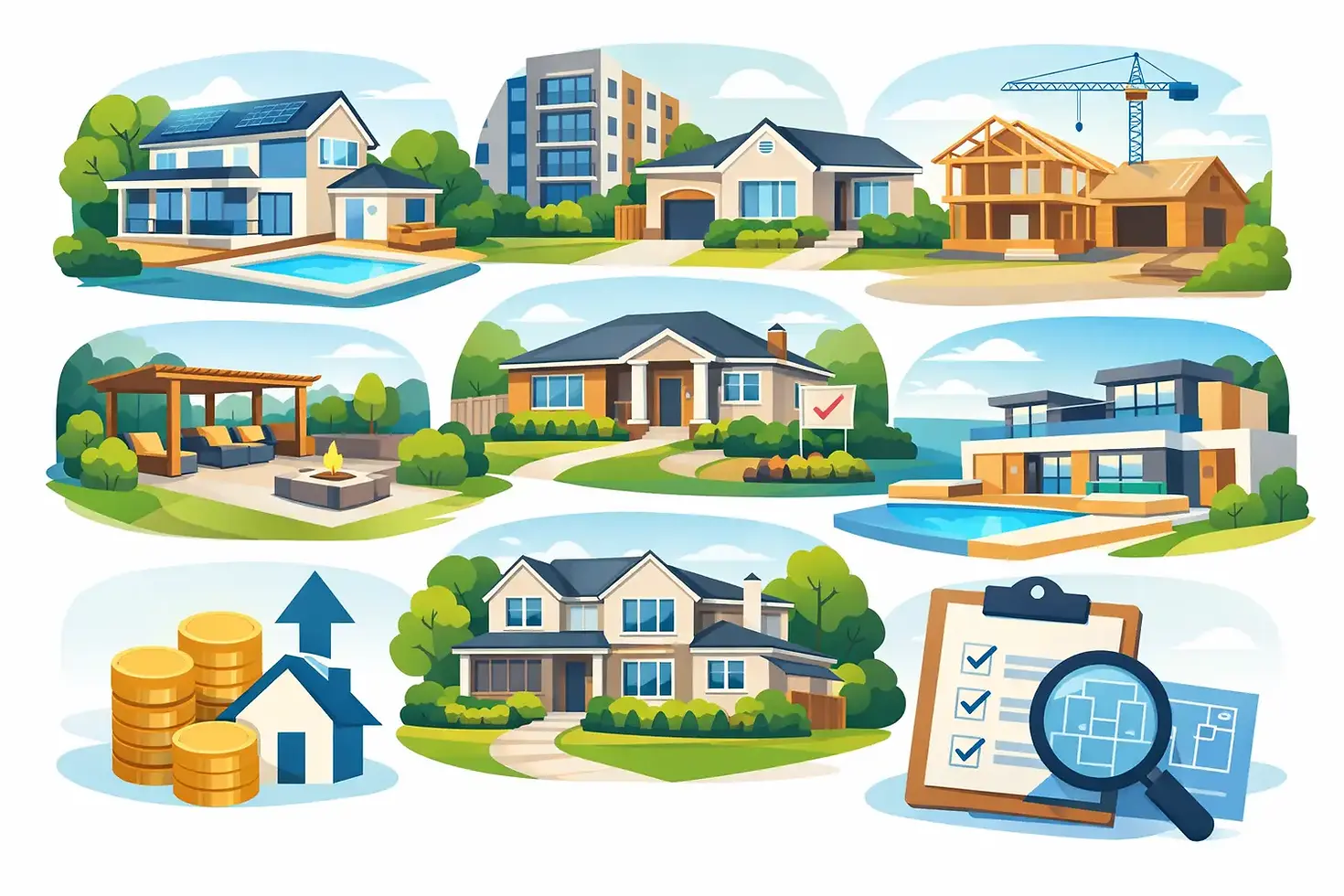
7 Residential Projects Examples That Add Value
- MINSOO HYUN

- May 31
- 6 min read
A strong residential project usually starts long before drawings are issued or permits are filed. For property owners and developers in New York, the best residential projects examples are the ones that solve a real need - more space, better performance, stronger resale value, or a clearer path through design and compliance.
That is why looking at examples matters. Not every project type carries the same level of complexity, return, or risk. A townhouse renovation in Brooklyn, a ground-up single-family home in the suburbs, and a multifamily building upgrade in the city may all be residential work, but each one demands a different design approach, engineering strategy, and approval process.
Why residential projects examples are useful
When owners review residential projects examples, they are usually trying to answer a practical question: what kind of project makes sense for this property? The answer depends on budget, zoning, existing conditions, timeline, and long-term goals.
Examples help clarify scope. A homeowner may think they need a full addition when a reconfiguration of the existing floor plan would deliver better results at a lower cost. A developer may assume cosmetic improvements are enough, only to find that structural, building systems, or code upgrades are what truly protect asset value.
Good planning begins with understanding the categories of residential work and how they perform in the real world. The sections below reflect common project types that often deliver strong value when they are designed and executed with coordination from the start.
1. Ground-up custom homes
A custom home is one of the clearest examples of a fully integrated residential project. It brings architecture, structural design, site planning, energy performance, and permitting into one coordinated process.
For owners, the advantage is control. The home can be planned around how the household actually lives, from room layout and natural light to storage, accessibility, and outdoor connections. For developers, a ground-up project creates the opportunity to align product, market demand, and construction efficiency from day one.
The trade-off is complexity. Ground-up homes require more upfront coordination than a renovation, especially when zoning limits, site drainage, utility connections, and sustainability goals all need to be resolved together. In many cases, early design decisions determine whether the project moves efficiently or encounters revisions later.
2. Full-home renovations
A full-home renovation is often the right choice when the structure is worth keeping but the layout, finishes, and systems no longer meet current expectations. These projects can transform dated properties into modern, high-performing homes without starting from scratch.
In New York, this type of work is especially common in older housing stock. Owners may want open layouts, larger kitchens, improved bathrooms, upgraded insulation, or safer and more efficient mechanical systems. A well-planned renovation can improve daily use while also increasing market appeal.
Still, renovation work has a hidden side. Existing conditions can introduce surprises such as structural deficiencies, noncompliant previous work, moisture damage, or outdated utilities. That is where integrated architectural and engineering review becomes especially valuable. It helps uncover risks early and keeps scope aligned with reality.
3. Home additions and vertical expansions
Some properties do not need a full redesign. They need more space. Additions and vertical expansions are practical residential projects examples for owners who want to stay in place while adapting the property to changing needs.
A rear addition might create a larger kitchen and family area. A second-story addition can make room for bedrooms and bathrooms in a growing household. In dense urban settings, vertical expansion may be one of the few realistic ways to add square footage.
These projects can add significant value, but only if the existing structure can support the new load and local regulations allow the expansion. Height limits, setbacks, lot coverage, and neighborhood context all matter. There is also a balance to strike between added area and construction disruption. In some cases, the most ambitious addition is not the most cost-effective one.
4. Multifamily building upgrades
For owners of duplexes, apartment buildings, and mixed residential properties, improvement work often goes beyond aesthetics. Multifamily upgrades can include apartment renovations, lobby and corridor improvements, facade repairs, roof replacement, accessibility improvements, and building systems modernization.
These projects tend to be driven by a combination of revenue goals, compliance needs, and tenant expectations. Renovated units may support higher rents or improved occupancy. Common area upgrades can strengthen first impressions and support long-term asset quality. Mechanical and electrical improvements may reduce maintenance issues and improve efficiency.
This project type benefits from careful sequencing. If a building remains occupied during construction, planning must account for safety, access, noise, and service continuity. The right project strategy is usually the one that balances long-term value with operational realities.
5. Kitchen and bathroom reconfigurations
Not every valuable residential project is large. Kitchens and bathrooms often deliver some of the most immediate functional gains because they affect daily use more than almost any other area of a home.
A kitchen reconfiguration may improve circulation, expand workspace, or create better connection to living areas. A bathroom redesign can address accessibility, storage, privacy, or outdated plumbing layouts. In many homes, these focused upgrades solve the biggest pain points without requiring a whole-property overhaul.
The key is to look beyond finishes. Cabinets, tile, and fixtures matter, but layout, ventilation, waterproofing, plumbing coordination, and code compliance matter just as much. A project that looks polished but is poorly detailed behind the walls can become expensive later.
6. Basement, attic, and underused space conversions
One of the most practical residential projects examples is converting space that already exists. Basements, attics, and other underused areas can sometimes become offices, recreation rooms, guest suites, storage zones, or legal habitable space, depending on code and physical conditions.
This approach can be appealing because it works within the existing building envelope. That may reduce certain costs compared with an addition. It can also make sense for owners who need flexibility quickly, especially as remote work and multigenerational living continue to influence residential design.
But these projects depend heavily on technical review. Ceiling height, egress, moisture control, insulation, fire safety, and mechanical systems all affect what is possible. A basement conversion that ignores water management or ventilation can create more problems than it solves.
7. Sustainable and resilience-focused upgrades
More residential clients are treating sustainability as a practical project goal rather than a branding exercise. That shift has made energy-efficient retrofits, envelope improvements, storm-resilient detailing, and system upgrades a meaningful category of residential work.
Examples include window replacement, insulation improvements, HVAC redesign, improved drainage, and materials selected for durability and lower maintenance. In some homes, these upgrades are part of a larger renovation. In others, they stand on their own because the owner wants lower operating costs and better long-term performance.
The value here is often cumulative. A single upgrade may help, but coordinated improvements usually perform better than isolated fixes. It also depends on the property. A landmarked building, for example, may have constraints that shape what can realistically be changed.
What separates a successful residential project from an expensive mistake
The strongest projects usually share one trait: alignment between vision and execution. That means the design reflects the owner's goals, the engineering supports the real conditions of the building, and the project team addresses code, constructability, and budget together rather than one at a time.
Problems tend to appear when scope is defined too loosely. A homeowner may approve plans before understanding permitting implications. A developer may move into pricing before investigating structural or systems limitations. Even smaller projects can stall when assumptions are left untested.
A coordinated process reduces that risk. For many property stakeholders, especially in a market as demanding as New York, the benefit of working with a team that understands both design intent and technical delivery is not just convenience. It is project control. That is one reason firms such as Innation Engineering & Architecture approach residential work as an integrated service rather than a disconnected set of tasks.
Choosing the right project for your property
The best residential project is not always the biggest one. Sometimes a targeted renovation delivers more usable value than a costly expansion. Sometimes a full repositioning is justified because piecemeal upgrades would only delay deeper issues.
A useful starting point is to ask three questions. What problem needs to be solved, what constraints will shape the project, and what outcome will matter most five years from now? If those answers are clear, the right scope becomes easier to define.
Residential work succeeds when it is tailored, realistic, and well coordinated. Whether the goal is added square footage, stronger property performance, or a better living experience, the smartest next step is usually the one grounded in careful planning and a full understanding of what the property can support.
The right project should do more than change how a home looks. It should make the property work better for the people who own it and for the future they have in mind.



Comments